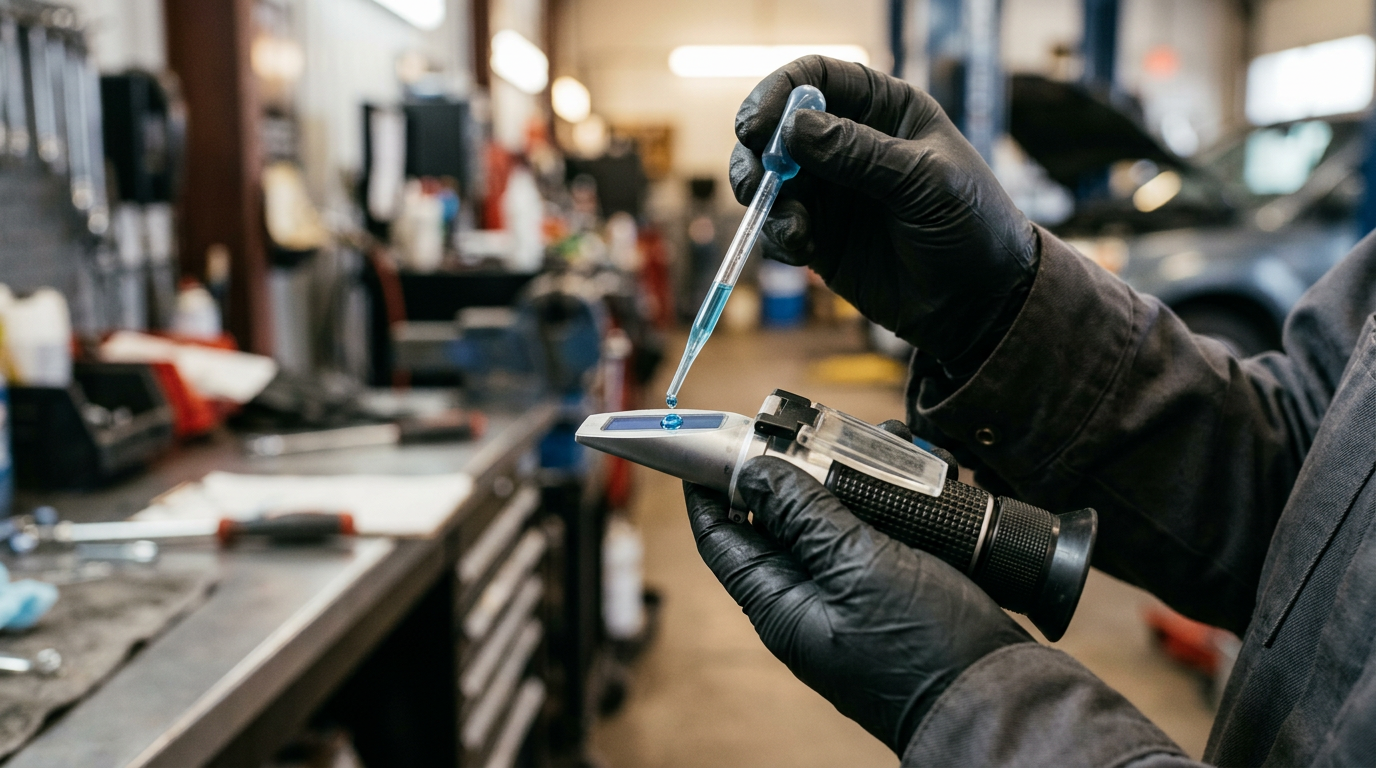
Using a Refractometer
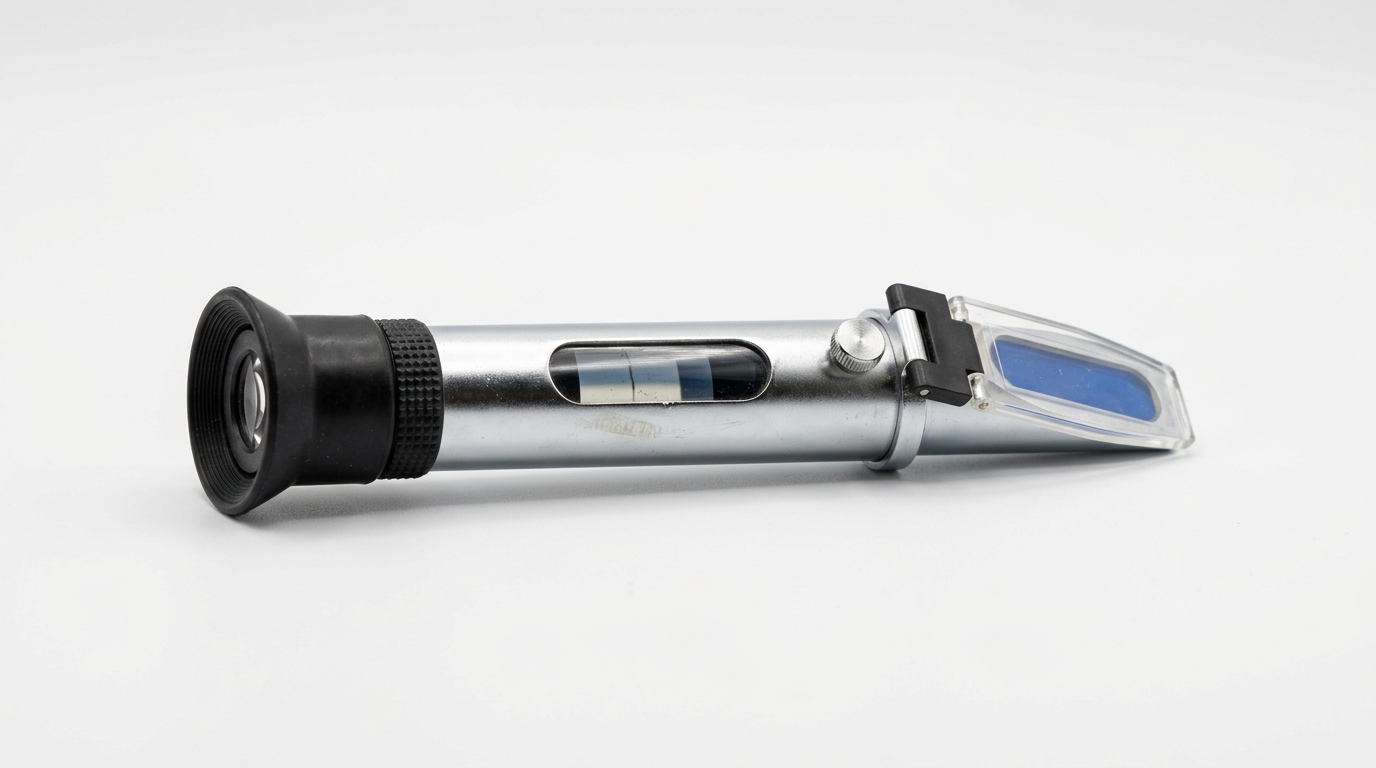
A refractometer is a versatile tool used to measure the concentration of various automotive fluids, including antifreeze, Diesel Exhaust Fluid (DEF), and battery fluid. Each fluid requires specific calibration and has defined measurement ranges.
Measurement Ranges
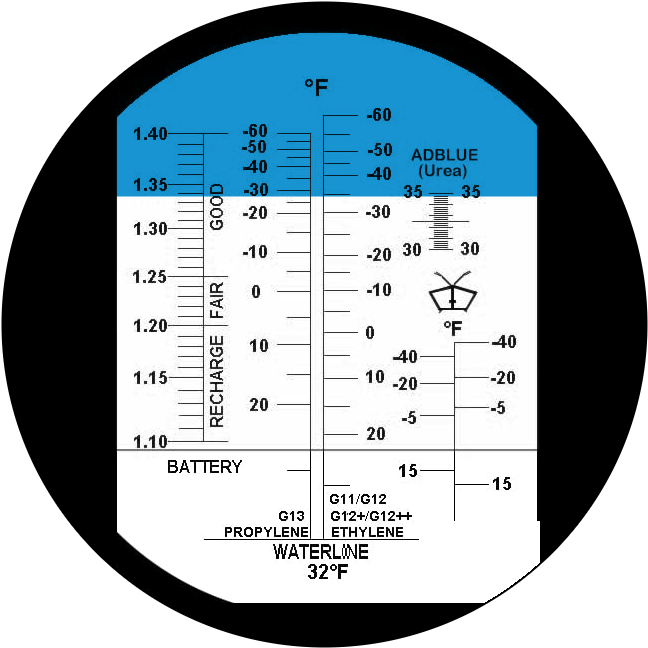
Automotive Antifreeze
Measurement Range
Calibration Scale
Specific to each type of antifreeze
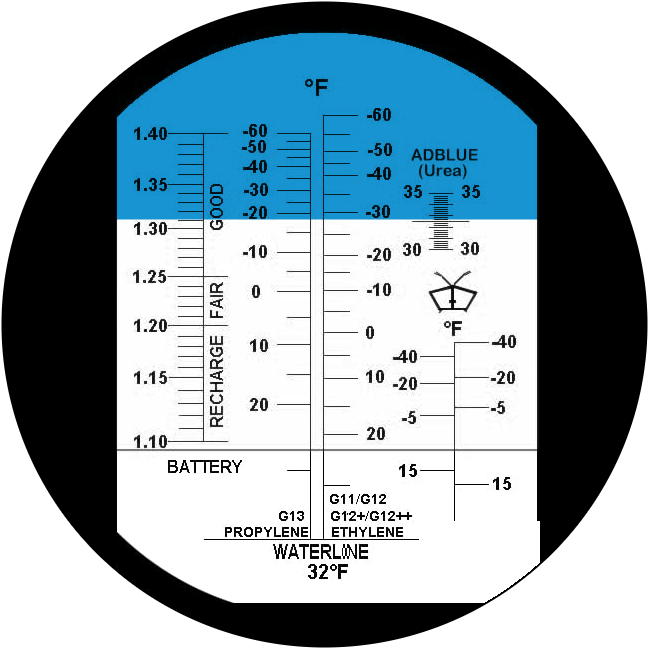
Diesel Exhaust Fluid (DEF)
Measurement Range
Calibration Scale
Specific to DEF, calibrated for urea and water mixture
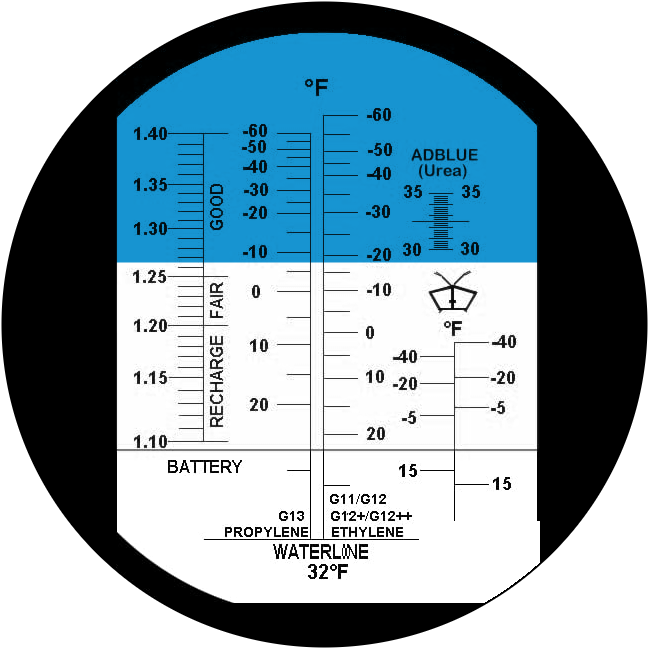
Battery Fluid
Measurement Range
Calibration Scale
Measured in terms of battery acid concentration
Quick Reference Table
| Fluid Type | Measurement Range | Calibration Scale |
|---|---|---|
| Automotive Antifreeze | Ethylene Glycol: 32 to -60°F Propylene Glycol: 32 to -50°F | Specific to each type of antifreeze |
| Diesel Exhaust Fluid (DEF) | Typically around 32-32.5% urea concentration | Specific to DEF, calibrated for urea and water mixture |
| Battery Fluid | Specific Gravity: 1.15 to 1.30 | Measured in terms of battery acid concentration |
Key Features of Refractometers
Multiple Scales
Refractometers designed for automotive use often have multiple scales to accommodate different fluids.
Ease of Use
A few drops of the fluid are placed on the prism, and the reading is taken through the eyepiece.
No Power Source Needed
These devices operate in ambient light, making them portable and convenient for field use.
Using a refractometer ensures accurate readings, which are crucial for maintaining the performance and longevity of automotive systems.
Purchase a Refractometer Here
One handheld refractometer reads antifreeze, DEF, and battery fluid. Put a few drops on the prism, look through the eyepiece, and read the result in seconds.